
Unexpected leaks, rising utility bills, and sudden loss of hot water are often caused by skipped maintenance. This checklist outlines routine inspections that help homeowners spot problems early, reduce system strain, and limit the risk of costly water heater failures.
This checklist applies to tank-style water heaters. Tankless systems require professional servicing due to internal components and descaling requirements.
Why Routine Water Heater Care Matters
As water heats inside a tank, sediment made up of rust, sand, and mineral debris settles at the bottom. In electric water heaters, sediment forms a layer over the heating elements. In gas models, it accumulates above the burner. This buildup slows heat transfer, increases run time, and accelerates wear on internal components such as the tank lining, valves, and seals.
Southern California’s hard water speeds scale buildup from minerals like calcium and magnesium. Over time, this can cause fluctuating water temperatures and reduced efficiency. Heating cycles also raise internal pressure, which stresses fittings and safety devices. When those components fail, large volumes of water can escape quickly and cause property damage.
Know Your Water Heater Type Before You Start
Identifying your water heater type ensures the checklist applies to your system and prevents missed maintenance issues.
Tank Water Heaters
Tank water heaters are the most common systems found in Southern California homes. These units store heated water in a tank and operate on natural gas or electricity. Routine maintenance focuses on sediment buildup, anode rod condition, thermostat settings, and proper operation of the temperature and pressure relief valve.
Tankless (On-Demand) Water Heaters
Tankless water heaters heat water only when needed and are common in remodeled and newer homes. These systems use compact internal components that are highly sensitive to mineral buildup. Maintenance involves internal flushing, descaling, and airflow checks, which are handled during professional service.
Tank Water Heater Maintenance Checklist
This checklist covers routine electric and gas water heater maintenance.
1. Shut off power or gas before inspection
Turn off electricity at the breaker or gas at the shutoff valve before inspecting connections or components.
2. Inspect the temperature and pressure relief valve
Lift the valve lever briefly to confirm it opens and releases water. A valve that sticks, leaks, or fails to reseat should be replaced.
3. Check for visible corrosion or moisture
Inspect fittings, seams, and the tank base for rust, dampness, or staining that may indicate leaks.
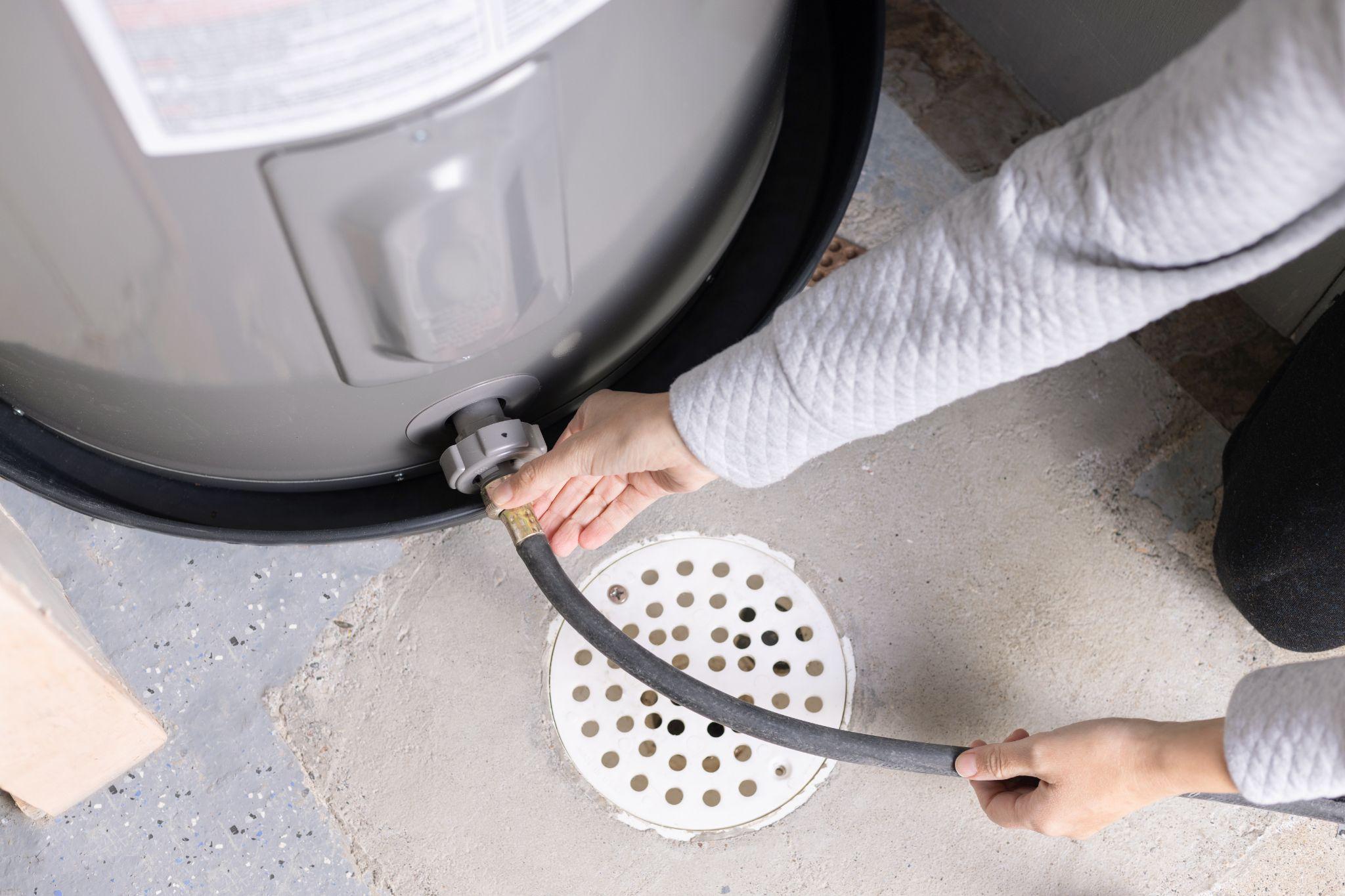
4. Flush sediment from the tank
Drain the tank annually to remove sediment and improve heating efficiency and system lifespan.
5. Test the thermostat setting
Keep the temperature near 120°F to reduce scalding risk and limit unnecessary system strain.
6. Inspect the anode rod condition
Replace the anode rod when it shows significant wear to protect the tank from internal corrosion.
Tankless Water Heater Maintenance Considerations
Tankless systems do not follow the same maintenance process as tank water heaters. Because water passes through narrow internal passages, mineral deposits build up more quickly and require internal cleaning.
Professional tankless maintenance includes descaling the heat exchanger with a manufacturer-approved solution, cleaning inlet filters, verifying venting and combustion air openings, and checking system diagnostics. Skipping scheduled service can shorten system life and reduce efficiency.
How Often Should Hot Water Heater Maintenance Be Done?
Most tank-style water heaters benefit from annual maintenance that includes sediment flushing and safety device inspection. Homes with hard water or heavy hot water usage may require more frequent service.
Tankless water heaters typically require annual professional descaling and airflow checks, following manufacturer guidelines.
Signs It’s Time to Call a Plumber
When these symptoms appear, preventative maintenance on a hot water heater may no longer be enough, and professional service is needed to avoid further damage.
- Discolored or metallic-tasting hot water
- Popping or rumbling during heating cycles
- Inconsistent water temperatures
- Reduced hot water output
- Moisture or pooling near the water heater
Trusted Water Heater Service From a Local Family Team
Routine maintenance helps extend system life, but licensed inspections ensure safety devices, gas connections, and internal components meet current standards and operate correctly.
Lynch Plumbing provides water heater repair and installation services throughout Los Angeles, Ventura County, and the San Fernando Valley. Professional service helps homeowners plan repairs or replacements before emergencies occur.
Service is available 24/7 for leaks, breakdowns, and no-hot-water emergencies.