
Choosing between a storage-tank water heater and a tankless model can affect your hot-water supply, utility use, available space, and long-term maintenance needs. Each system has advantages, and the right choice depends on your household’s water usage, existing utilities, budget, and plans for the property.
This tank vs. tankless water heater comparison explains how each system works, what it may cost to install, and which factors homeowners should evaluate before scheduling a water heater replacement.
Quick Comparison of Tank and Tankless Water Heaters
The following table highlights the primary differences between these two common water-heating systems.
| Feature | Tank Water Heater | Tankless Water Heater |
|---|---|---|
| How it works | Stores and heats a set volume of water | Heats water as it flows through the system |
| Initial cost | Typically lower | Typically higher |
| Hot-water supply | Limited by tank capacity | Continuous within the unit’s flow-rate limit |
| Energy use | May experience standby heat loss | Avoids most standby heat loss |
| Space requirements | Requires room for a storage tank | Usually mounts on a wall |
| Expected lifespan | Commonly around 10 to 15 years | Can last 20 years or longer |
| Installation | Often straightforward when replacing a similar unit | May require gas, electrical, venting, or plumbing upgrades |
| Maintenance | Periodic flushing and inspections | Regular flushing and scale control may be needed |
Actual performance, cost, and service life vary based on the model, installation quality, water conditions, usage, and water heater maintenance.
What Is a Tank Water Heater?
A traditional water heater stores a set amount of heated water in an insulated tank. Common residential sizes include 40- and 50-gallon units, although other capacities are available.
The system heats the stored water using gas or electricity and maintains the selected temperature throughout the day. This means hot water is already available when a fixture is opened, but energy may be used to keep the water warm even when no one needs it.
Once the tank’s supply has been depleted, the household must wait for the system to heat more water. The recovery time depends on the unit’s capacity, fuel source, and heating output.
Tank Water Heater Pros and Cons
Tank-style systems remain common because they are familiar, widely available, and suitable for many homes. However, their storage capacity, energy use, space requirements, and expected lifespan should be considered before choosing a new system.
Advantages of a Tank Water Heater
Homeowners may consider a traditional tank system for the following reasons:
- Lower initial cost: A tank water heater usually costs less to purchase and install than a comparable tankless system.
- Straightforward installation: Replacing an existing tank with a similar model may require fewer changes to the property’s water lines, fuel connections, ventilation, and installation space.
- Stored hot-water supply: A properly sized tank keeps a predictable amount of hot water ready for household use.
- Familiar repairs: Most plumbers regularly service tank-style systems, and replacement parts are generally easy to find.
- Practical replacement option: A traditional unit may be suitable for homeowners working within a limited water heater replacement budget.
Some modifications may still be necessary when the new equipment differs in size, fuel type, or efficiency.
Disadvantages of a Tank Water Heater
The potential drawbacks include the following:
- Limited capacity: A tank can run out of hot water when several people shower or multiple fixtures and appliances operate close together.
- Standby heat loss: The system uses energy to maintain the temperature of stored water, including during periods of low demand.
- Larger footprint: A tank water heater requires dedicated floor space in a utility room, garage, closet, or another installation area.
- Shorter expected lifespan: A conventional tank model commonly lasts around 10 to 15 years, although its actual service life can vary.
- Risk of tank leaks: An aging or corroded tank may leak enough water to damage nearby flooring, walls, cabinets, or stored belongings.
Sediment buildup, corrosion, water quality, usage, installation, and water heater maintenance can all affect the water heater lifespan. A larger tank may provide more hot-water capacity, but it also occupies more space and keeps a greater volume of water heated.
What Is a Tankless Water Heater?
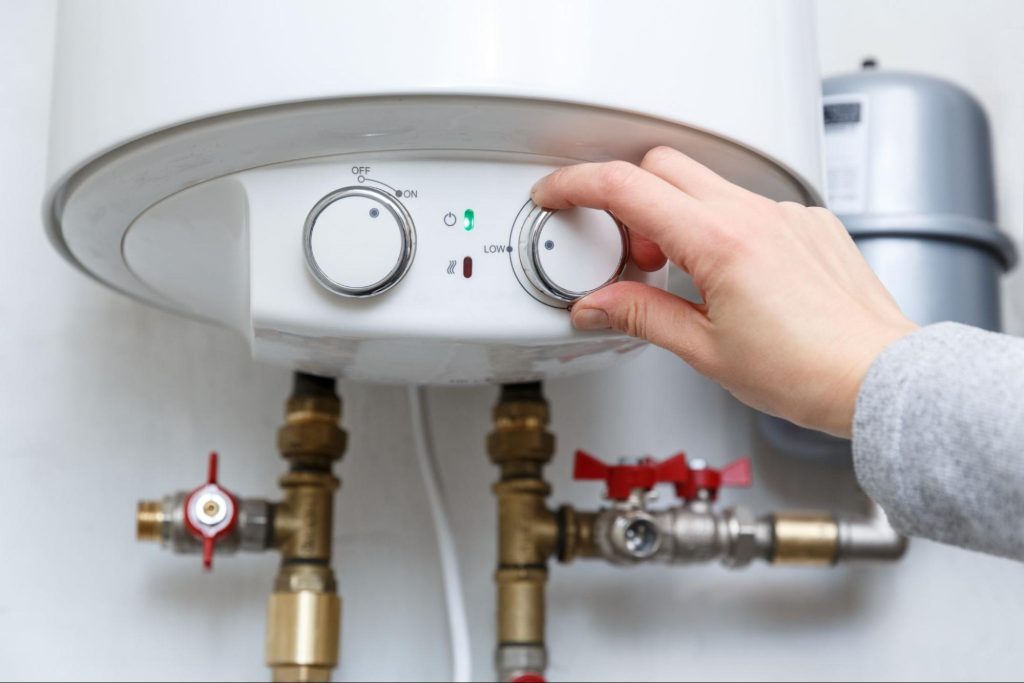
A tankless water heater heats water when a hot-water fixture is opened. Cold water moves through the unit, where a gas burner or electric heating element raises its temperature before sending it to the fixture.
This type of system is also called an on-demand water heater because it operates in response to water flow. It does not keep dozens of gallons heated in a storage tank.
“On demand” does not mean hot water arrives at the faucet immediately. Water that has cooled inside the pipes must still flow out before newly heated water reaches the fixture. Pipe length and layout affect this delay.
Tankless Water Heater Pros and Cons
Advantages of a Tankless Water Heater
Homeowners may consider a tankless system for the following reasons:
- Continuous hot water: A correctly sized water heater can continue heating water without exhausting a stored supply.
- Reduced standby heat loss: The unit heats water when it is needed instead of maintaining an entire tank at a set temperature.
- Longer potential lifespan: Many tankless models can last 20 years or longer with proper service and replaceable components.
- Compact design: Wall-mounted equipment can free up floor space.
- No large storage tank: Removing the tank reduces the risk of a major tank rupture, although the unit and its plumbing connections can still leak.
A continuing supply does not mean the system has unlimited capacity. Every unit has a maximum flow rate.
Disadvantages of a Tankless Water Heater
The potential drawbacks include the following:
- Higher upfront expense: The equipment and labor usually cost more than a standard tank replacement.
- Utility upgrades: Some homes need a larger gas line, new venting, a dedicated electrical circuit, or an upgraded electrical panel.
- Flow-rate limits: Simultaneous showers, appliances, and faucets may exceed the unit’s heating capacity.
- More involved retrofits: Converting from a tank to a tankless system may require significant changes to the installation area.
- Regular scale control: Mineral deposits can restrict flow and reduce heating performance.
- Possible delivery delay: Hot water still needs time to travel through the home’s pipes.
Reviewing the tankless water heater pros and cons with a professional can help homeowners avoid selecting a system that is too small for their peak demand.
What Affects Tankless Water Heater Cost?
Tankless water heater cost depends on more than the price of the equipment. The size and fuel type of the unit, the condition of existing utilities, local permit requirements, and the complexity of the installation can all influence the total.
The tankless water heater installation cost may include:
- Removing and disposing of the existing equipment
- Modifying water lines
- Increasing gas-line capacity
- Installing code-appropriate venting
- Adding electrical circuits or upgrading the electrical panel
- Installing isolation valves for future flushing
- Completing permit or inspection requirements
A site evaluation can identify these needs before work begins. This gives the homeowner a clearer comparison between a direct tank replacement and a tankless conversion.
Gas vs. Electric Water Heaters
Fuel type affects heating capacity, installation requirements, operating expenses, and equipment options. A gas vs. electric water heater comparison should account for both the type of system and the property’s existing utilities.
Gas Water Heaters
Gas-fired tank systems often have faster recovery rates than comparable electric tanks. Gas tankless models may also support higher flow rates, making them suitable for homes with greater simultaneous hot-water demand.
These systems require an adequate gas supply and safe venting. Changing to a higher-capacity gas tankless model may require upgrades to the gas line or exhaust system.
Electric Water Heaters
Electric tank systems do not require combustion venting and may be easier to place in certain areas. Their operating cost depends on local electricity rates and the efficiency of the equipment.
Whole-home electric tankless models can place a substantial demand on the electrical system. Some properties may need new circuits, larger wiring, or an electrical-panel upgrade before installation.
Which System Is Better for Your Household?
A tank water heater may be the practical option for a household seeking a lower initial price and a relatively simple replacement. It can also work well when the existing system meets the family’s hot-water needs and there is enough room for the equipment.
A tankless system may appeal to homeowners who want a compact design, a longer potential service life, and continuous hot water within a defined flow rate. The benefits are strongest when the unit is correctly sized and the necessary utility upgrades fit the project budget.
Before choosing a system, evaluate these factors:
- The number of people living in the home
- The number of fixtures used at the same time
- The required temperature rise
- The available gas or electrical capacity
- The amount of installation space
- The upfront project budget
- Local energy rates
- The hardness of the water
- Expected maintenance needs
- The amount of time you plan to own the property
The lowest equipment price does not always produce the lowest long-term cost. Installation changes, energy use, repair needs, maintenance, and the expected replacement timeline all affect total ownership expenses.
Get Help Choosing and Installing Your Next Water Heater
The tankless vs. tank water heater decision should reflect how your household uses hot water and what your property can support. Lynch Plumbing can evaluate your current equipment, discuss repair and replacement options, and explain the installation requirements for tank and tankless systems.
Since 1985, the family-owned and operated company has provided residential and commercial plumbing services across Los Angeles, Ventura County, and the San Fernando Valley. Contact Lynch Plumbing to schedule water heater repair, maintenance, replacement, or professional water heater installation.
Frequently Asked Questions
Is a tankless water heater worth the cost?
It can be worthwhile for homeowners who value space savings, a longer potential lifespan, and continuous hot water. The decision depends on household demand, required utility upgrades, maintenance expectations, energy rates, and the expected length of homeownership.
Can a tankless water heater run out of hot water?
It does not run out of stored hot water because it does not use a tank. However, it can struggle to maintain the desired temperature if the household’s simultaneous water demand exceeds its maximum flow rate.
Does a tankless system provide instant hot water?
Not necessarily. It begins heating when water starts flowing, but cooled water already inside the pipes must reach the fixture first. A recirculation system may reduce the wait in some homes.
Do tankless water heaters require maintenance?
Yes. Maintenance may include flushing mineral scale, cleaning filters, inspecting connections, and following the manufacturer’s service schedule. Homes with hard water may need more frequent attention or water-treatment recommendations.
Schedule Appointment