
There are usually clear signs your water heater is going bad before it stops working completely. Each symptom can point to one or more problems inside the system. Recognizing what each one means helps homeowners identify issues earlier, avoid unnecessary repairs, and explain them more clearly to a plumber for faster diagnosis.
The Most Common Signs Your Water Heater Is Failing
From inconsistent temperatures to visible leaks, these water heater failure signs can indicate whether you may need repair or replacement.
Little or No Hot Water
When your tank-style unit stops delivering enough hot water, the issue often comes down to a single component. A failed water heater element, an unresponsive thermostat, or a damaged dip tube can all reduce output. When the dip tube cracks, cold water mixes in at the top of the tank, leaving you with lukewarm water at the tap.
Inconsistent Water Temperature
If your water suddenly shifts from hot to cold, a faulty thermostat may be responsible. Electric units rely on two thermostats to regulate heating cycles. When one fails, the unit may stop heating water consistently. Sediment buildup inside the tank or scale formation in tankless systems can also interfere, creating unpredictable temperature swings whenever hot water is used.
Strange Noises Coming From the Tank
Dissolved calcium and magnesium in hard water sink to the tank bottom over time, forming a mineral sediment crust. In gas water heaters, water trapped beneath this layer can superheat when the burner fires, turn to steam, and force its way through the sediment, creating popping or rumbling sounds. Because the crust acts as insulation between the burner and the water above, heating takes longer to complete.
Leaks or Moisture Around the Unit
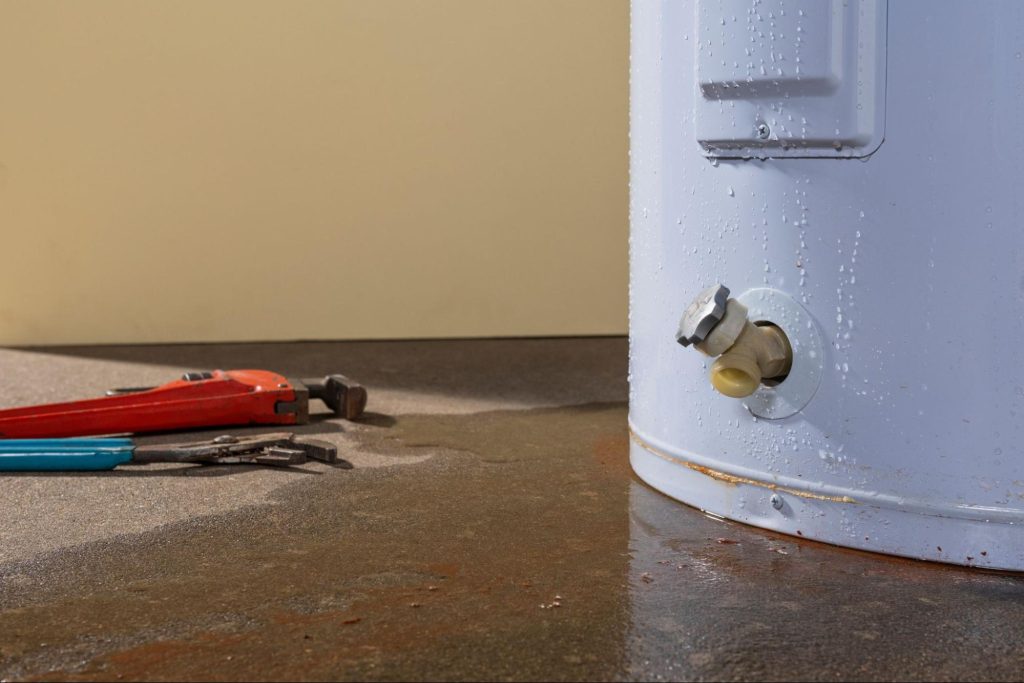
A water heater leaking can mean something very different depending on where the moisture appears. Dripping around pipe connections, at the pressure relief valve, or along supply lines points to a repairable seal or valve issue. Pooling water at the base of the tank is more serious and usually means the steel lining has cracked or corroded.
Rusty or Discolored Hot Water
Every storage tank contains a sacrificial anode rod designed to rust in place of the steel walls. Once the rod is fully consumed, the tank begins to corrode, producing rust-colored water, brown discoloration, or a metallic taste at the hot tap. Run the cold and hot taps separately. Clear cold water but discolored hot water points to corrosion at the source. Rusty water from both taps typically indicates a supply pipe issue.
Rising Energy Bills
A steady increase in gas or electricity costs without any change in household usage often points to a water heater losing efficiency. As units age, scale on heating elements and wear on internal components mean the system works longer to heat the same volume of hot water. Without any visible symptoms, higher operating costs can be one of the first indicators of a failing unit.
Frequent Repairs
Multiple component failures within a relatively short period often indicate a system in decline. When parts like the pressure relief valve or anode rod fail in quick succession, other components may also be approaching the end of their service life. Continued repairs rarely extend reliable service life, making replacement the more practical option.
Your Water Heater Is Over 10 Years Old
The water heater lifespan of a traditional storage-tank model is typically 8 to 12 years, though hard water and inconsistent maintenance can shorten it considerably. Once a unit passes the 10-year mark, sudden failure becomes more likely, even without obvious symptoms. Poor maintenance history accelerates that risk.
What These Warning Signs Usually Mean
Not every water heater issue signals the end of the system’s life. Some problems are relatively minor, while others point to more significant deterioration.
Repairable Issues
Failures like a worn heating element, faulty thermostat, depleted anode rod, or cracked dip tube are typically repairable by a licensed plumber.
Other serviceable problems include pressure relief valves that stop sealing, loose wiring in electric units, and clogged inlet screens that restrict water flow.
Signs You Likely Need a Replacement
Some water heater failure signs point toward replacement rather than repair:
- Pooling water at the tank base because the steel lining has cracked or corroded beyond repair
- Rust throughout the hot water supply because internal corrosion has advanced too far to restore
- Sustained overheating from sediment buildup that accelerates internal wear
- Multiple component failures within a short period that indicate broader system deterioration
Tank vs. Tankless Water Heater Warning Signs
Tank Water Heater Issues
A hot water tank can develop additional warning signs beyond those already covered. Watch for:
- Black particles in tap water caused by a deteriorating dip tube or worn internal components
- Persistent condensation on the tank exterior caused by excessive humidity, poor ventilation, or unusually cold incoming water
- A tank surface that feels unusually hot to the touch, which may indicate insulation deterioration or overheating
- Small puddles that disappear quickly, potentially signaling intermittent leaks before a larger failure occurs
- Breaker trips in electric models or recurring pilot-light issues in gas models
Tankless Water Heater Issues
These units tend to fail differently:
- Frequent error codes or resets caused by failing sensors or control boards
- Burner or ignition problems in gas-powered systems
- Buzzing or ticking noises caused by scale buildup, electrical issues, or worn internal components
- Scale accumulation in heat exchangers that reduces efficiency and increases heating lag time
- Reduced hot water pressure caused by internal blockages in the heat exchanger
What Happens If You Ignore a Failing Water Heater
An undetected leak can saturate walls and subfloors, creating mold within 24 to 48 hours.
A thermostat stuck in the on position can cause water temperatures to rise excessively, placing additional stress on safety components and increasing pressure inside the tank.
In gas models, a deteriorating flue can release carbon monoxide indoors.
A broken water heater left unaddressed can escalate into a costly system breakdown.
What To Do If Your Water Heater Is Showing Signs of Failure
Note the unit’s age, model number, and how long each symptom has persisted. This information helps a plumber assess the fault more efficiently.
If the tank is actively leaking, shut off the cold water supply valve and, if it is safe to do so, turn off the gas supply to gas-fired units according to the manufacturer’s instructions.
Never adjust the thermostat to compensate for lukewarm water. Doing so masks the underlying problem and increases energy consumption.
Prevent Water Heater Breakdowns Before They Escalate
Lynch Plumbing provides water heater repair and installation across Los Angeles, Ventura County, and the San Fernando Valley. Our licensed plumbers identify the source of the problem, explain whether repair or replacement is the better option, and complete all work to code.
Call Lynch Plumbing today to schedule a water heater inspection and get a clear answer on the next steps.
Schedule Appointment