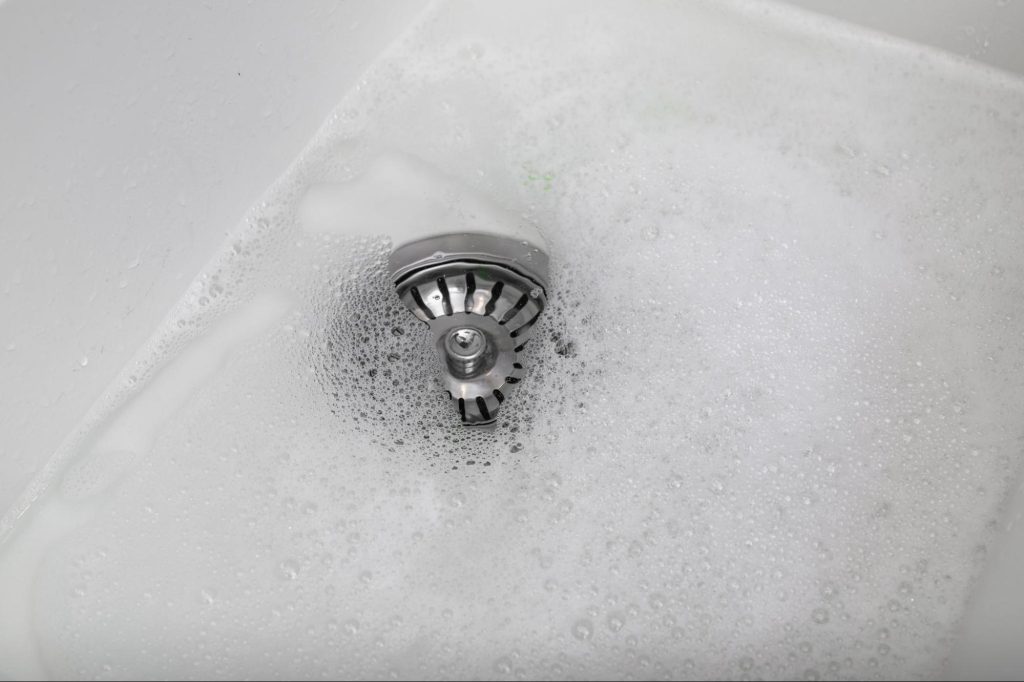
Standing water in a sink or a backed-up shower is a common drain problem many homeowners first try to clear with a plunger or a store-bought drain cleaner.
When the same fixture backs up again, or other drains begin to slow, the issue may involve the main sewer line.
Identifying the source of the problem matters because localized drain clogs and main sewer line blockages require different diagnostic methods and solutions.
Quick Answer: Slow Drain vs. Blocked Sewer Line
Each plumbing fixture, such as a sink, shower, toilet, or washing machine, has its own drain pipe that carries wastewater away. A slow drain usually means the drain pipe serving that fixture is partially blocked. These branch drains connect to a single main sewer line that carries wastewater from the home to the municipal sewer or septic system. A blocked main sewer line prevents wastewater from leaving the home. As pressure builds, sewage often backs up through the lowest drains in the house, which are commonly ground-floor showers, tubs, or floor drains.
What Causes a Slow Drain?
Everyday use allows soap residue, grease, food particles, hair, and other debris to gradually accumulate inside drain pipes. Other common causes of slow drains include:
- Hair catches inside bathroom sink, shower, and tub drains and may bind with soap scum, forming a clump.
- Grease cools and solidifies inside kitchen drain pipes, creating a sticky surface that traps food particles, coffee grounds, and other debris.
- Hard water is common in Los Angeles and the San Fernando Valley, where elevated levels of calcium and magnesium may leave mineral scale deposits along pipe walls.
- Items such as wipes and cotton swabs do not break down in water and can lodge inside drain pipes, trapping passing debris and building up into a larger mass.
A slow drain often indicates that a partial blockage has already formed. As more debris collects, the blockage becomes harder to clear.
What Causes a Clogged Sewer Line?
The main sewer line, which carries wastewater from the home to the municipal sewer or septic system, can become blocked by:
- Tree root intrusion is common in older Los Angeles and San Fernando Valley neighborhoods with mature landscaping. Ficus trees are particularly well known for aggressive root systems, although many other tree species can invade aging sewer lines through joints or cracks, restricting flow as roots grow inside the pipe.
- Many pre-1970s homes in the region still have original clay or cast iron pipes. These materials are more prone to cracking and partial collapse than modern PVC. Broken pipe sections can catch debris, which gradually builds into a blockage.
A significant blockage in the main sewer line can prevent multiple fixtures throughout the home from draining properly. Because the pipe runs underground, clearing it typically requires a licensed plumber with professional equipment.
Slow Drain vs. Blocked Sewer Line: Key Differences
This table outlines the key symptoms, causes, and risks of each.
Factor | Slow Drain | Blocked Sewer Line |
Fixtures affected | One | Multiple, typically slow drains in whole house |
Symptom location | At the affected sink, tub, washing machine, or dishwasher | Lowest drains in the home, often ground-floor showers or tubs |
Common causes | Hair, grease, soap scum, mineral scale | Root intrusion, aging or corroded pipes |
Responds to a plunger | Often yes, for minor clogs | Unlikely; symptoms often return or worsen |
Risk if ignored | Complete blockage, higher repair costs | Sewage backup, pipe damage, health hazards |
Signs You Have a Localized Drain Clog
These indicators commonly point to a clog in a single drain:
- Water drains slowly in only one sink, shower, or tub
- Standing water pools and takes several minutes to clear
- A gurgling sound occurs at the affected fixture immediately after water drains
- A foul odor comes from one drain, often caused by organic buildup inside the trap or pipe
- The clog responds, at least partially, to a plunger or drain snake
When drains are clogged because of hair, grease, or soap scum, they can often be cleared with simple tools or household remedies. A clog that keeps returning may indicate a deeper blockage that requires professional cleaning.
Signs of a Clogged Main Sewer Line
Main sewer line problems follow a different pattern. When slow drains begin appearing throughout the house, or using one fixture affects another, the restriction is likely deeper in the plumbing system. Common warning signs include:
- Multiple fixtures drain slowly at the same time, particularly bathrooms and the kitchen
- Gurgling sounds come from a toilet when a nearby shower or washing machine drains as air is forced back through shared plumbing lines
- Water rises in the shower or tub when the toilet is flushed
- Sewage odors appear in multiple areas of the home instead of coming from a single drain
- Drainage worsens when high-demand appliances run because large discharges from a washing machine or dishwasher can overwhelm a partially blocked main line
- The lowest drain in the home, typically a ground-floor shower, tub, or floor drain, backs up before any others
- In older homes throughout Los Angeles, the San Fernando Valley, and Ventura County, aging clay sewer lines and shifting soil can gradually restrict wastewater flow
How Professional Plumbers Diagnose Sewer Problems
When symptoms suggest the main sewer line may be involved, professional diagnosis identifies the cause and location of the blockage before any work begins.
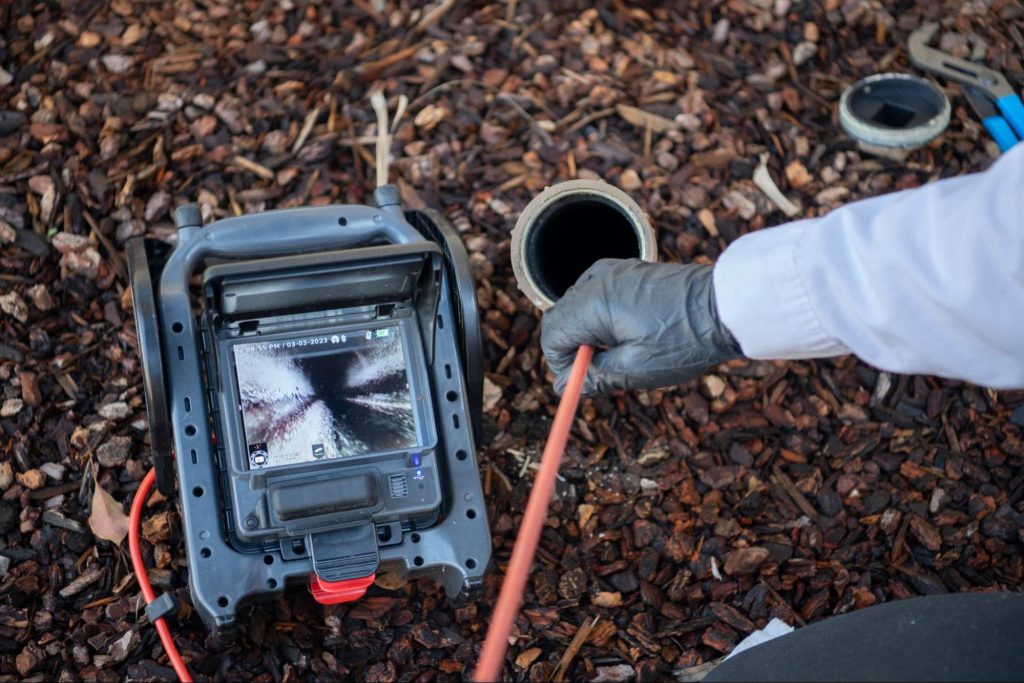
A plumber typically begins by accessing the sewer cleanout, a capped pipe fitting that provides direct access to the main sewer line.
A waterproof sewer camera is then used to inspect the interior of the pipe. The camera identifies the type and location of the obstruction, such as root intrusion, collapsed pipe sections, cracked pipes, or pipe misalignment caused by soil movement or ground settlement.
Depending on the inspection findings, the plumber may recommend hydro jetting to remove grease, sludge, mineral deposits, and many types of root intrusion from the interior walls of the pipe. Unlike a mechanical auger, which creates an opening through a clog, hydro jetting cleans the full interior of the pipe, removing buildup the auger may leave behind.
If the camera inspection reveals a collapsed or severely deteriorated clay or cast iron sewer line, repair or replacement may be the most effective long-term solution.
Schedule Drain and Sewer Line Service
If you’re dealing with recurring drain issues or suspect a blocked main sewer line, Lynch Plumbing provides residential drain cleaning and sewer line services throughout Los Angeles, Ventura County, and the San Fernando Valley. Our licensed plumbers use camera inspections and professional drain cleaning equipment to identify the source of the problem and restore proper drainage.
Contact Lynch Plumbing today to schedule an inspection and drain services.
Schedule Appointment