
Emergencies involving water or gas lines can escalate quickly. A burst pipe can flood a home within minutes, while a gas leak can create a serious safety hazard. Knowing how to shut off both systems gives you control in situations where time matters.
This guide explains how water and gas shutoffs differ, where to find them, and how to act during common emergency scenarios.
Understanding the Difference Between Water and Gas Shutoffs
Water and gas systems serve different purposes and require different responses during an emergency.
A water shutoff valve controls the flow of water into your home. It is typically used during plumbing issues such as leaks, burst pipes, or appliance failures. Turning it off stops water from entering the system and limits damage.
A gas shutoff valve controls the flow of natural gas. Gas powers appliances like stoves, water heaters, and furnaces. Shutting it off is necessary if there is a suspected leak, damage to gas lines, or fire risk.
Water issues usually cause property damage. Gas issues can pose health and safety risks, including fire or exposure to harmful fumes. That difference shapes how and when each shutoff should be used.
How to Shut Off Your Home’s Water Supply
In a plumbing emergency, knowing how to turn off the water to your house allows you to act quickly and limit damage.
Where to Find Your Main Water Shutoff Valve
The main water shutoff valve is often located near where the water line enters your home. Common locations include:
- Near the front of the house along an exterior wall
- Inside a garage or utility area
- In a basement or crawl space
- Outside near the water meter
In warmer regions like Southern California, it is often outside in a ground-level box near the curb or sidewalk.
Step-by-Step: Turning Off Water Safely
- Locate the main water shutoff valve.
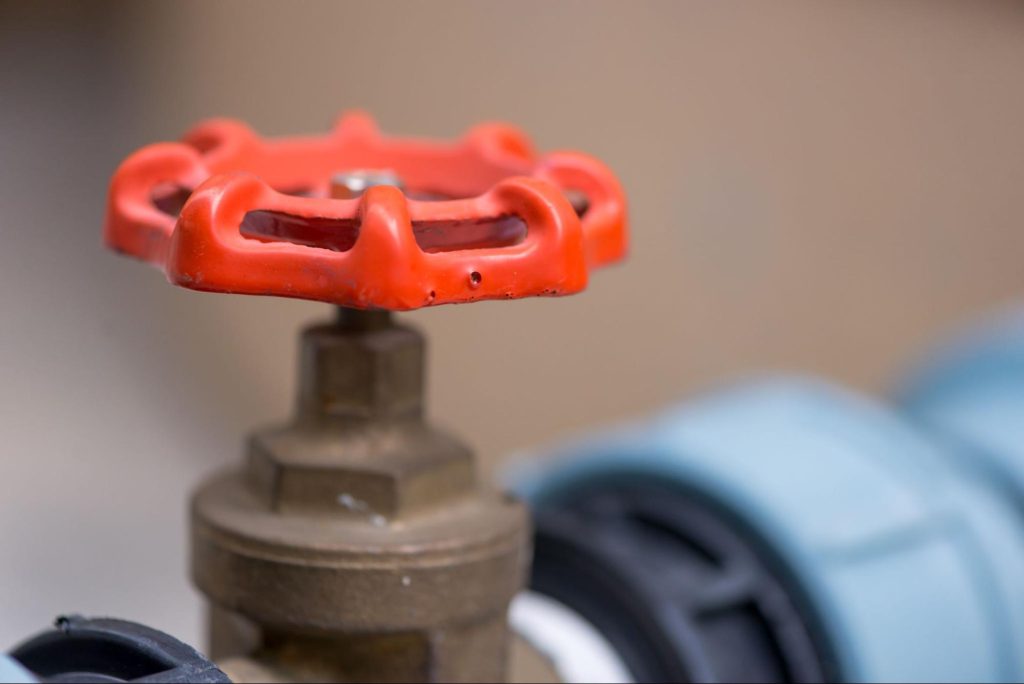
- Identify the valve type. It may be a round wheel handle or a lever-style valve.
- Turn the valve clockwise until it stops. For lever valves, turn it so it is perpendicular to the pipe.
- Open a faucet inside the home to confirm the water flow has stopped and to relieve pressure in the system.
Once the valve is closed, avoid turning it back on until the issue has been identified.
How to Shut Off Your Home’s Gas Supply
Different emergencies call for different responses, and knowing which system to shut off first can help prevent further damage or danger.
Burst Pipe or Major Water Leak
Shut off the main water supply immediately. This stops the flow and reduces flooding. Gas usually does not need to be turned off unless water has reached gas appliances or lines.
Smell of Gas or Suspected Leak
Shut off the gas supply if it is safe to do so. Leave the area right away and avoid using electrical switches or open flames. Do not attempt to locate the leak yourself.
Water does not need to be shut off in this situation.
Natural Disasters
- Earthquake: Shut off gas if you suspect line damage. Water may also need to be shut off if pipes are compromised.
- Fire: Shut off gas if it can be done safely. This reduces fuel to the fire.
- Flood: Shut off water to prevent additional flow into the home. Gas may need to be turned off if appliances are affected.
Each situation requires quick judgment based on visible risks and safety conditions.
When to Evacuate and Contact Emergency Services
Recognizing when to evacuate and contact emergency services helps protect your safety during high-risk water or gas emergencies.
Water Emergencies That May Require Emergency Services
Water issues can sometimes require outside help, especially when they involve:
- Significant flooding that threatens electrical systems
- Structural damage caused by prolonged leaks
- Water entering areas near wiring or outlets
If there is any risk involving electricity, leave the area and call emergency services.
Gas Emergencies That Require Immediate Evacuation
Leave the property immediately if you notice:
- A strong sulfur or rotten egg smell
- Hissing sounds near gas lines
- Physical symptoms such as dizziness or nausea
Do not delay to shut off the valve if conditions are unsafe. Once outside, contact emergency services and your gas provider.

How to Prepare Before an Emergency Happens
Preparation reduces confusion and helps you act quickly when something goes wrong.
- Locate both shutoff valves and ensure they are accessible
- Keep a wrench or shutoff tool near the gas meter
- Label valves clearly for easy identification
- Test the water shutoff valve periodically to ensure it works
- Share this information with everyone in the household
It also helps to keep contact information for emergency services and repair professionals readily available.
Fix the Source of the Problem With an Experienced Team
Once the immediate risk has passed and it is safe to return, the next step is addressing the root of the problem.
For water-related issues, professional plumbing leak repair ensures the source of the damage is properly fixed and prevents future issues.
For gas-related concerns, expert gas leak repair is necessary to restore safe operation and confirm that all connections are secure.
Lynch Plumbing provides both plumbing and gas services across Los Angeles, Ventura County, and the San Fernando Valley. Our team responds quickly and focuses on safe, lasting repairs. Reach out today to schedule service from licensed professionals.
Schedule Appointment