
In a plumbing system, clean water should flow in one direction—from the water source into your home. If your home is connected to a public supply, that means water flows in from municipal lines. If it uses a private well, it flows from the well system.
Changes in water pressure or damaged pipes can cause water to reverse direction, carrying contaminants into your household supply. A backflow prevention device stops this from happening and helps protect your health and property.
Backflow prevention is especially important in California, where drought conditions, high demand, and seismic activity can all create sudden pressure changes in water lines.
What Is a Backflow Preventer?
A backflow preventer is a plumbing device designed to keep water moving the right way, from the main supply into your home. It blocks reverse flow that could allow pollutants or chemicals into your drinking water.
In residential plumbing, a backflow preventer is typically installed just after the main shutoff valve or at dedicated connections for systems like irrigation lines, fire sprinklers, swimming pools, or private wells—any place where water could pick up contaminants before flowing back into clean water lines.
How Does a Backflow Preventer Work?
Backflow can occur in two ways:
- Backsiphonage: A sudden drop in supply pressure can pull water from your home’s pipes toward the main line, much like suction through a straw. This can happen if a nearby water main breaks or firefighters use hydrants, creating a rapid drop in pressure.
- Back-pressure: When pressure inside your system is greater than the supply pressure, water is pushed backward. This can occur with pumps, heating systems, or elevated water tanks.
A backflow preventer uses valves or air gaps to react instantly if water starts to move in the wrong direction.
Common types of plumbing backflow preventers include:
- Atmospheric Vacuum Breaker (AVB): Works for low-risk uses like garden hoses or small irrigation systems. When water stops flowing, it opens to allow air in, breaking any suction.
- Pressure Vacuum Breaker (PVB): Used for larger irrigation or fire sprinkler systems under constant pressure. A check valve and air inlet stop reverse flow if supply pressure drops.
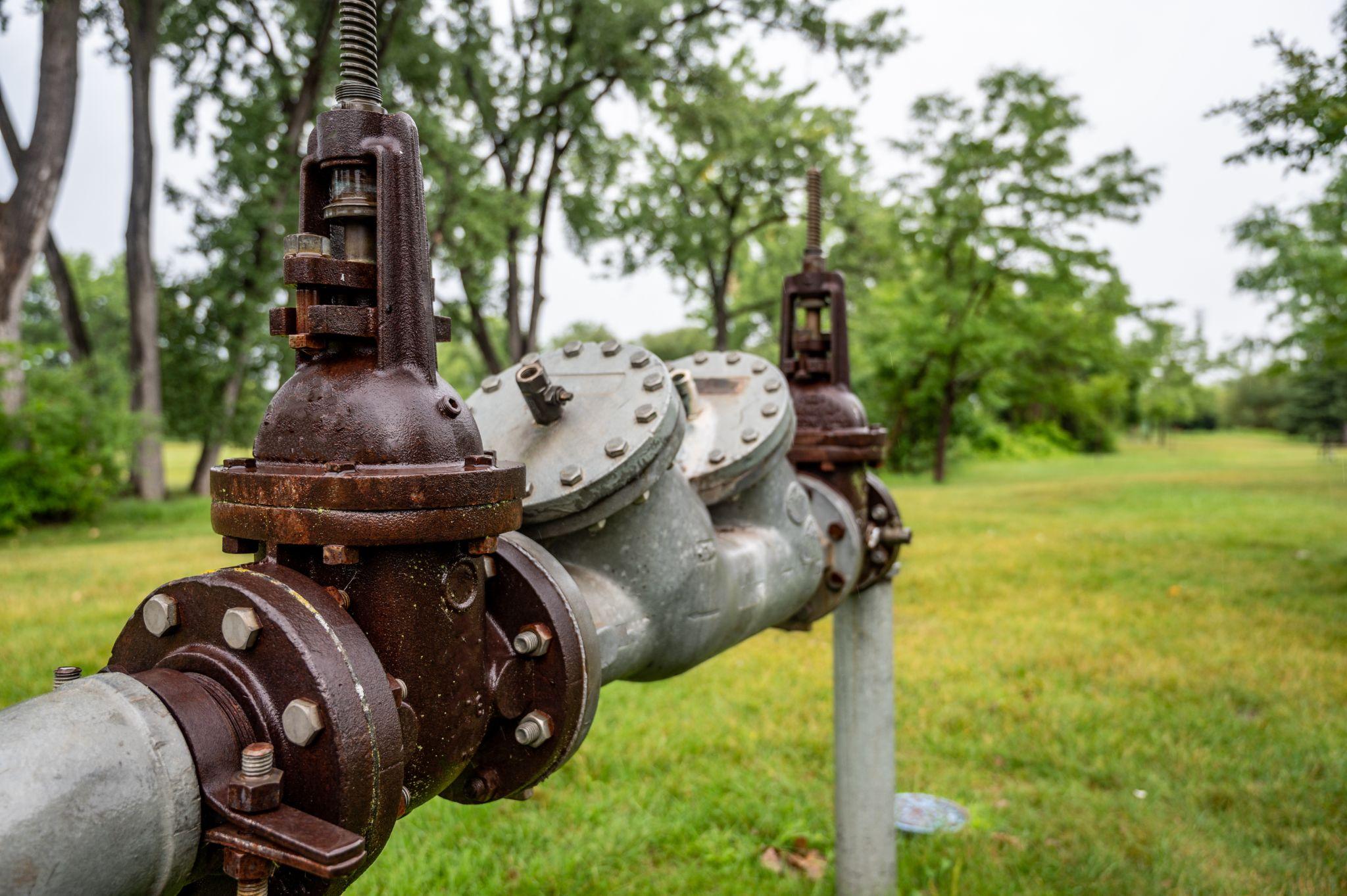
- Reduced Pressure Zone (RPZ) Assembly: Suited for high-risk systems such as private wells or chemical handling. It has two check valves plus a relief valve that releases water if pressure builds—this discharge is a safety feature, not a malfunction.
These assemblies require precise installation, typically above ground and in a location with proper drainage. Incorrect placement or orientation can reduce effectiveness.
Why Backflow Is a Risk to Your Home and Health
Even minor reversals in water flow can carry contaminants into your plumbing system.
Common sources include:
- Irrigation systems: Fertilizers, pesticides, and animal waste from lawns and gardens
- Swimming pools and hot tubs: Chlorine, cleaning agents, and bacteria from stagnant water
- Hoses and faucets: Submerged hoses in buckets, ponds, or tanks creating direct contamination points
- Private wells: Bacteria or chemicals from improperly connected wells
These contaminants can make your water unsafe for drinking and everyday use. Aside from health concerns, backflow can also damage pipes, valves, and appliances due to sudden changes in pressure. A failed backflow prevention system on an irrigation line, for example, could allow grit or debris into indoor plumbing, clogging fixtures and reducing the lifespan of appliances.

When Backflow Preventers Are Required by Law
In some cases, California plumbing codes and local regulations may require homeowners to install a backflow prevention device, especially when there’s a potential risk of contaminating the public water supply. Check with your local water provider or building department to understand what’s required in your area.
You may be required to install and maintain a backflow preventer if your property has:
- In-ground irrigation systems: Lawn or garden watering systems connected to the home’s plumbing
- Swimming pools or hot tubs: Units with automatic fill lines
- Fire sprinkler systems: Residential fire suppression setups connected to the main water supply
- Private wells: Wells tied into a property that also has municipal water service
- Other cross-connections: Any plumbing arrangement that could connect clean water with a potential contaminant source
Annual testing is typically required for high-risk installations like RPZ assemblies. A licensed plumber uses specialized gauges to measure performance, checking that valves seal correctly and open at the right pressure. If a device fails inspection, repairs or replacement must be completed promptly to avoid service interruption or fines.
Because requirements vary by location, it’s best to confirm with your local water provider or building department before installation or service.
Lynch Plumbing: Backflow Experts for California Homes
For over 35 years, Lynch Plumbing has helped California homeowners protect their water and plumbing systems. Our licensed team can:
- Select the right backflow preventer and match it to your system and local requirements
- Complete professional plumbing installation and repairs with proper placement and function
- Perform thorough testing to verify safety, accuracy, and compliance with codes
- Provide certified documentation for annual inspections and municipal reporting
If your home has irrigation lines, a pool, or any system that could allow backflow, we can help you stay in compliance and keep your water safe. Contact Lynch Plumbing today to schedule installation, testing, or maintenance in the San Fernando Valley, Los Angeles, or Ventura County.